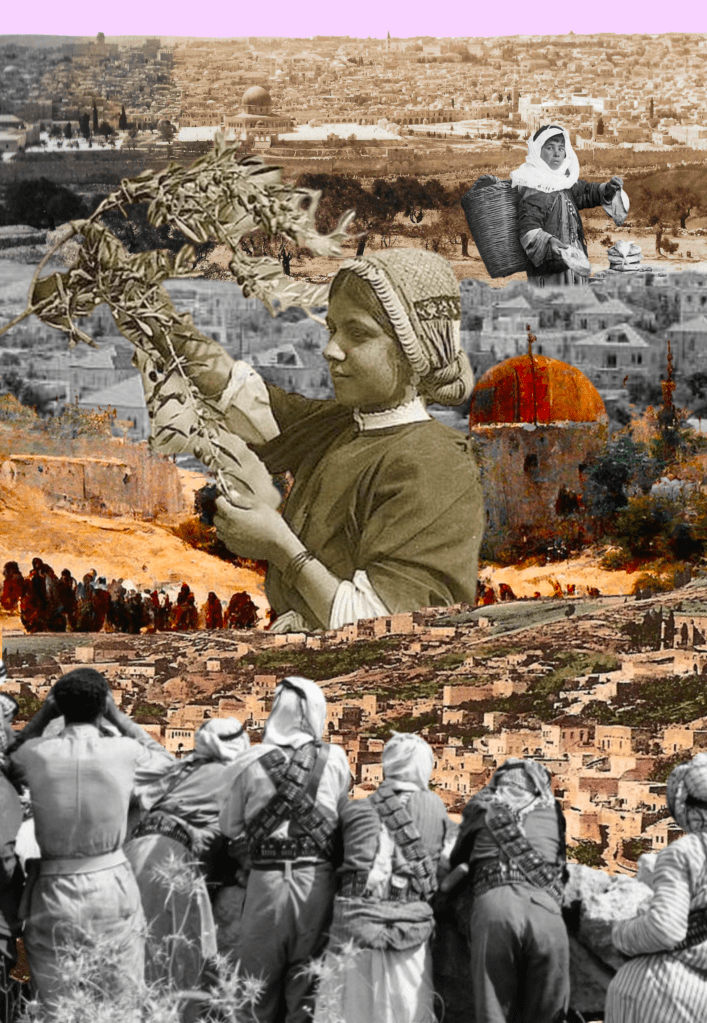
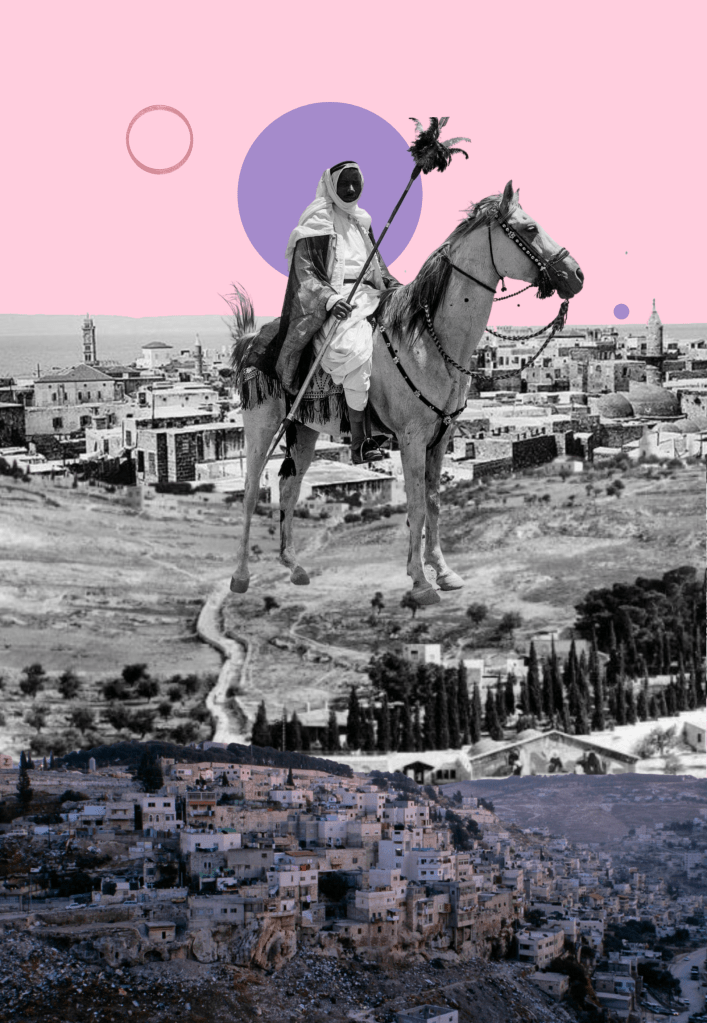
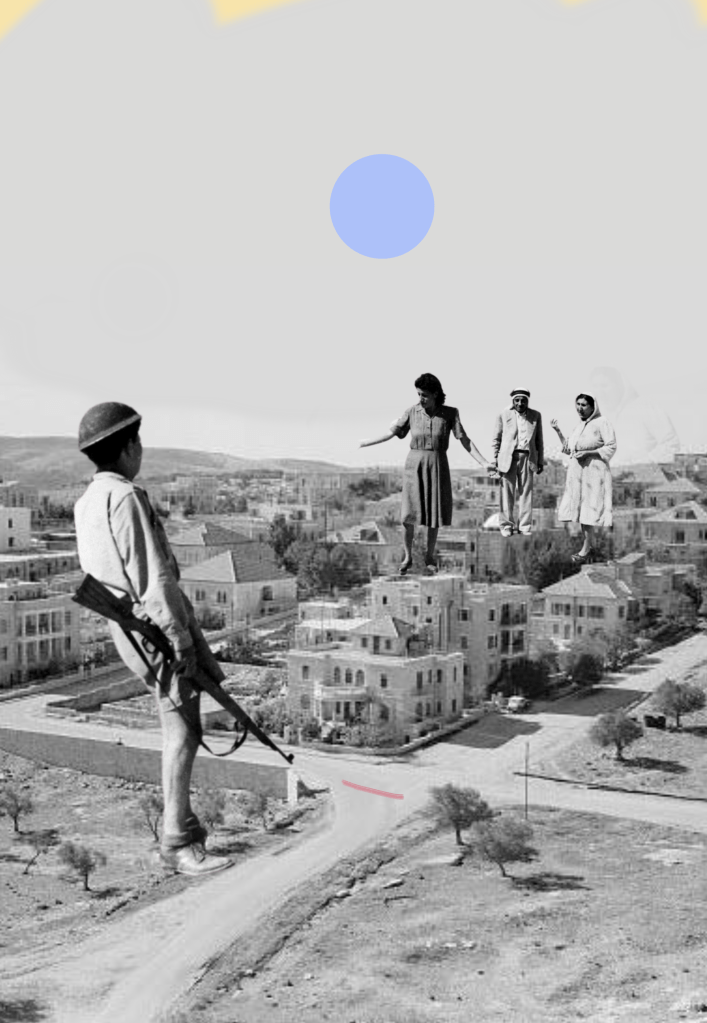
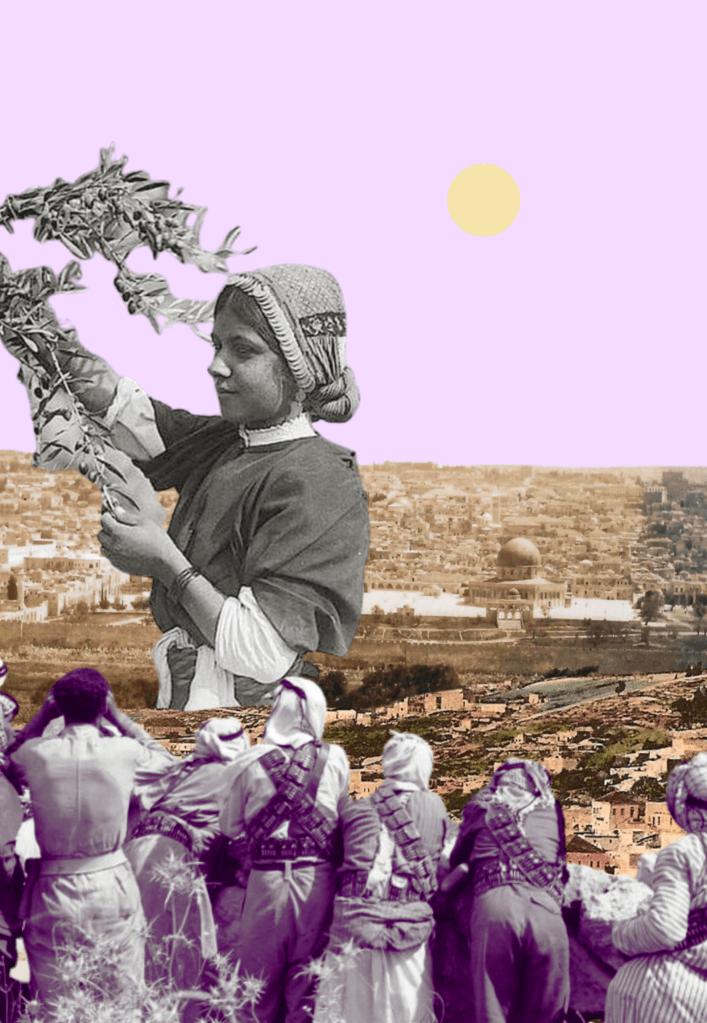
I believe that anything that can be imagined can be achieved, and vice versa. I’ve been thinking about what Palestine would look like without conflict, and in my research, I came across some photographs of Palestine taken by non-local photographers who had a colonial perspective. But what really caught my attention was the work of Khalil Raad, a Palestinian photographer who captured various aspects of people’s lives in Palestine. There was one portrait in particular that stood out to me
a joyful woman carrying a child. It made me question the belief that childbirth in post-Nakba Palestine became a form of resistance. These photos showed me that the people of Palestine before the Nakba truly loved life.
I also want to mention the significance of the Mount of Olives, a holy site in Jerusalem that is revered in Islam, Judaism, and Christianity. It added a spiritual and historical dimension to my perception of Palestine. But I wanted to go even further and explore different dimensions of the artwork. That’s when I found a photo of Damascus Gate, an important entrance to Jerusalem with bustling markets and cultural significance. It added another layer of representation.
Putting all these elements together, I can imagine a Palestine without conflict or bloodshed. It’s a place where people cherish life, where spirituality and history intersect, and where cultural diversity thrives at every corner.



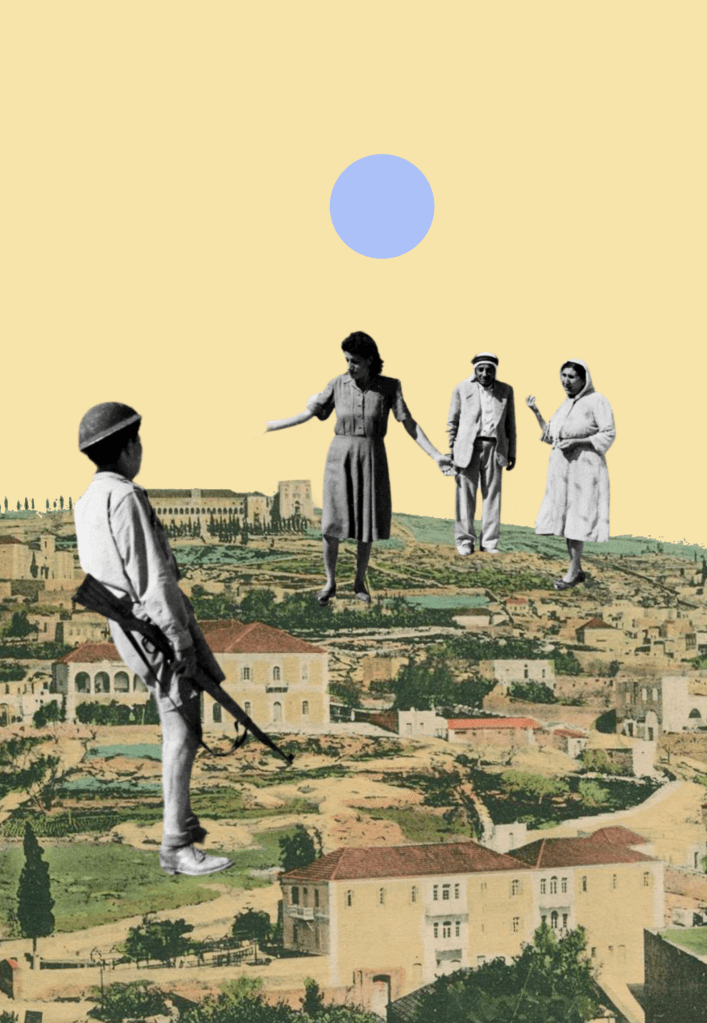
 Ahmad Haddad